
Impact of Technology on Law: Transforming Legal Practice in the Digital Age
Introduction: The Digital Revolution Meets the Legal Profession
Technology is reshaping every sector, and law is no exception. From the rise of artificial intelligence to blockchain and digital case management, the impact of technology on law is profound. Modern legal practice now integrates tools that enhance efficiency, accuracy, and access to justice.
Law firms, courts, and educational institutions worldwide are adopting innovative technology to streamline workflows, improve client services, and make legal processes more transparent. For aspiring lawyers, understanding the impact of technology on law is no longer optional—it is essential for career readiness.
This article explores how technology is transforming legal education, practice, research, and access to justice, providing examples and insights for law professionals and students alike.

Technology in Legal Research and Case Management
Legal Research Tools
Traditionally, legal research required extensive visits to libraries and manual review of casebooks and law journals. Today, platforms like Westlaw, LexisNexis, and AI-powered research tools allow lawyers to quickly access relevant case law, statutes, and scholarly commentary.
The impact of technology on law in this domain is evident: legal professionals can conduct faster and more accurate research, reducing time and costs for clients.
Case Management Systems
Law firms and courts increasingly rely on case management software such as Clio, MyCase, and PracticePanther. These platforms allow lawyers to track deadlines, store client information securely, and monitor case progress digitally.
Such tools illustrate the impact of technology on law by improving efficiency and ensuring compliance with strict procedural requirements.
Artificial Intelligence and Automation in Law
AI-Powered Legal Analytics
Artificial intelligence is now a powerful tool for predicting legal outcomes. AI can analyze historical data, assess the likelihood of winning a case, and suggest optimal legal strategies.
Law firms adopting AI platforms have reported significant improvements in decision-making speed and accuracy. This demonstrates how the impact of technology on law is reshaping strategy, risk assessment, and client counseling.
Contract Review and Automation
Technology also automates routine tasks like contract review, due diligence, and document drafting. AI tools can scan thousands of documents in minutes, identifying risks and inconsistencies.
The impact of technology on law in this area allows lawyers to focus on higher-level strategic work, enhancing productivity while reducing human error.
E-Courts and Digital Judicial Processes
Virtual Hearings
The COVID-19 pandemic accelerated the adoption of virtual hearings and online dispute resolution. Courts now use platforms like Zoom, Microsoft Teams, and bespoke judicial systems for remote trials and hearings.
The impact of technology on law here ensures that legal processes remain uninterrupted and more accessible, especially in regions with logistical challenges.
Digital Filing and Case Tracking
Many jurisdictions now allow electronic filing of pleadings and real-time case tracking. This reduces paperwork, speeds up proceedings, and enhances transparency.
By digitizing the judicial process, the impact of technology on law is clear: increased efficiency, improved record-keeping, and wider public access.
Cybersecurity and Data Protection
Protecting Client Data
With legal information moving online, law firms must prioritize cybersecurity. Sensitive client data requires encryption, secure cloud storage, and compliance with regulations like GDPR.
The impact of technology on law extends beyond efficiency — it also includes the responsibility to safeguard confidential information.
Legal Implications of Cybercrime
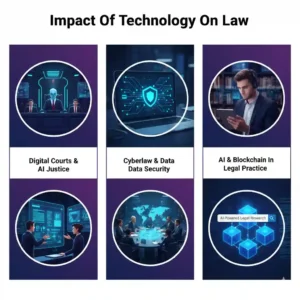
As technology evolves, cybercrime has become a major legal challenge. Lawyers specializing in cyber law, digital compliance, and data privacy are in high demand, illustrating the impact of technology on law in creating new practice areas.
Technology in Legal Education
Online Learning and E-Libraries
Law students benefit from online courses, virtual libraries, and legal databases that enhance learning beyond the classroom. Platforms like Schooloflaw.net integrate technology to provide research resources, webinars, and international law courses.
The impact of technology on law in education is transformative: students can access up-to-date legal information, participate in online moot courts, and collaborate globally.
Simulation and Interactive Learning
Technology allows interactive learning through virtual simulations of courtrooms, contract negotiations, and dispute resolution. Such simulations prepare students for practical legal challenges, showcasing how the impact of technology on law shapes future professionals.
Access to Justice and Legal Aid
Legal Tech Platforms for Public Access
Digital platforms like LegalZoom and local e-justice initiatives enable the public to access legal guidance, file complaints, and receive assistance without visiting courts physically.
This democratization of legal services highlights the impact of technology on law, making justice more accessible to underserved communities.
AI Chatbots and Virtual Legal Assistants
AI-powered chatbots can provide legal information, assist in document preparation, and guide users through complex legal processes. Such innovations expand the reach of legal aid, illustrating another key impact of technology on law.
Emerging Areas Created by Technology
Blockchain and Smart Contracts
Blockchain technology introduces smart contracts that execute automatically when conditions are met. Lawyers now specialize in drafting, auditing, and advising on these contracts.
The impact of technology on law here is profound, creating specialized legal fields and opportunities for tech-savvy lawyers.
AI Regulation and Ethical Law
As AI systems become ubiquitous, new laws are needed to regulate AI use, liability, and ethical compliance. Lawyers working in this domain are directly benefiting from the impact of technology on law, as technology itself generates new legal requirements.
Benefits of Technology in Law
-
Efficiency: Automation reduces time-consuming tasks, enabling lawyers to focus on strategic work.
-
Accuracy: AI and digital tools minimize human error.
-
Global Reach: Virtual platforms allow cross-border collaborations and international practice.
-
Accessibility: Digital legal services improve access for clients in remote regions.
-
Innovation: Technology creates new legal fields, expanding career opportunities.
Challenges Posed by Technology
While the impact of technology on law brings many benefits, it also presents challenges:
-
Cybersecurity risks threaten client confidentiality.
-
Regulatory compliance is constantly evolving.
-
Ethical concerns arise with AI-driven legal decisions.
-
Skill gaps require continuous learning for lawyers to stay relevant.
Institutions like Schooloflaw.net are addressing these challenges by integrating technology training into legal curricula.
✅ FAQs on the Impact of Technology on Law
1. How is technology changing legal research?
Technology allows lawyers to access case law, statutes, and commentary online, using AI to quickly analyze thousands of documents, improving speed and accuracy.
2. What are the emerging legal fields created by technology?
Cyber law, AI regulation, blockchain, smart contracts, and data privacy law are all fields that emerged due to technology’s impact on law.
3. Can technology improve access to justice?
Yes. Online legal services, AI chatbots, and virtual courts make legal guidance more accessible to underserved populations.
4. How are law schools adapting to technological changes?
Institutions like Schooloflaw.net integrate online learning, virtual moot courts, legal databases, and tech-focused courses into their curriculum.
5. What skills do lawyers need to thrive in a tech-driven legal environment?
Analytical thinking, digital literacy, AI proficiency, cybersecurity awareness, and adaptability are essential skills to leverage the impact of technology on law.