
How to Become a Lawyer in Pakistan: Step-by-Step Guide
Introduction: The Journey to a Legal Career
Becoming a lawyer in Pakistan is a prestigious and rewarding journey. A career in law not only allows you to uphold justice but also provides opportunities in corporate sectors, public service, human rights advocacy, and international law. Understanding how to become a lawyer in Pakistan involves more than just earning a degree; it requires strategic planning, rigorous education, licensing, and practical experience.
Whether your ambition is to practice criminal law, corporate law, or specialize in constitutional law, this guide will walk you through the steps, eligibility criteria, and key insights necessary to achieve your goal.
How To Become a Lawyer:

Step 1 – Meet Basic Eligibility Requirements
Before starting your journey, you must fulfill certain basic requirements:
-
Educational Qualification:
-
Intermediate (FSc/FA or equivalent): Minimum requirement for admission to LLB programs in Pakistan.
-
Bachelor’s Degree (for 3-year LLB): Required for graduates pursuing a postgraduate law degree.
-
-
Age Requirements:
-
Most universities accept candidates above 17 years old for law programs.
-
-
Nationality:
-
Both Pakistani nationals and foreign students can pursue law in Pakistan, provided they meet admission requirements.
-
Meeting these criteria is the first step in how to become a lawyer in Pakistan.
Step 2 – Choose the Right Law Program
1. 5-Year LLB Program (After Intermediate)
The 5-year LLB program is designed for students directly after their intermediate education.
Advantages:
-
Comprehensive curriculum covering all major areas of law.
-
Integrated practical training and moot court exercises.
-
Early exposure to legal theory and practice.
2. 3-Year LLB Program (After Bachelor’s Degree)
The 3-year LLB program is suitable for graduates from other disciplines.
Advantages:
-
Shorter duration
-
Flexible schedule for working professionals
-
Focused study on advanced legal topics
Selecting the appropriate program is crucial for your roadmap on how to become a lawyer in Pakistan.
Step 3 – Prepare for Law School Admission Exams
Many universities in Pakistan, such as Schooloflaw.net, require entrance exams before admission. These exams often test:
-
English proficiency
-
General knowledge
-
Logical reasoning
-
Essay writing
Tips for Admission Exam Preparation:
-
Review past papers from target universities.
-
Practice writing essays on legal and social topics.
-
Stay updated on current affairs and legal developments.
-
Consider professional coaching or online preparatory courses.
Entrance exam success is an important milestone in how to become a lawyer in Pakistan.
How To Become a Lawyer:

Step 4 – Complete Your LLB Degree
The LLB program is the backbone of your legal education. Key areas of study include:
-
Constitutional Law
-
Criminal Law
-
Civil Procedure
-
Corporate Law
-
Family Law
-
Intellectual Property Law
-
International Law
Importance of Practical Training
Most universities incorporate:
-
Moot courts: Simulated courtroom exercises
-
Internships: Experience in law firms, courts, and NGOs
-
Legal research projects: Developing analytical and drafting skills
Practical exposure ensures you’re ready for real-world legal challenges, a critical part of how to become a lawyer in Pakistan.
Step 5 – Complete Mandatory Internship (Apprenticeship)
After completing your LLB, the next step is practical training under a senior lawyer.
-
Duration: Typically 6 months to 1 year
-
Purpose: Gain hands-on experience in litigation, legal drafting, and client interaction
-
Benefits: Helps build networks, improves courtroom confidence, and teaches practical problem-solving
Internships provide essential skills required to excel in your legal career.
Step 6 – Enroll with Pakistan Bar Council
To officially practice law, you must register with the Pakistan Bar Council (PBC) or your provincial bar council.
Requirements:
-
LLB degree from a recognized university
-
Internship completion certificate
-
Application and registration fees
-
Passing the Bar Exam (if applicable)
Enrollment with the bar council legally qualifies you to practice law — the final administrative step in how to become a lawyer in Pakistan.
Step 7 – Pass the Bar Exam
The Bar Exam is conducted by provincial bar councils such as:
-
Sindh Bar Council
-
Punjab Bar Council
-
Khyber Pakhtunkhwa Bar Council
-
Balochistan Bar Council
Exam Coverage:
-
Professional ethics and conduct
-
Legal drafting
-
Civil and criminal procedures
-
Constitutional law
Passing the Bar Exam allows you to practice as an advocate in courts across Pakistan.
Step 8 – Choose a Specialisation
After qualifying, you may focus on a law specialisation to enhance career prospects. Popular options include:
-
Corporate Law
-
Criminal Litigation
-
Family Law
-
Human Rights Law
-
Tax Law
-
Intellectual Property Law
Specialising helps in career advancement and establishing expertise in a specific area of law.
Step 9 – Start Practicing
After completing education, internship, bar registration, and optionally choosing a specialisation:
-
Join a law firm or set up your own practice.
-
Participate in courtroom proceedings and client advisory.
-
Keep updating skills through workshops, seminars, and courses.
Active practice is essential to fully understand how to become a lawyer in Pakistan.
Step 10 – Continuing Professional Development
Law is an evolving profession. To stay competitive:
-
Attend workshops and legal seminars.
-
Subscribe to legal journals and publications.
-
Learn about emerging fields like Cyber Law, International Trade Law, and Intellectual Property.
-
Engage in pro bono work or legal aid services.
Lifelong learning ensures you remain competent and informed throughout your career.
Tips for Success in Your Legal Career
-
Time Management: Law practice requires managing multiple cases and deadlines.
-
Networking: Build professional relationships with peers, mentors, and judges.
-
Analytical Thinking: Develop strong reasoning skills for case analysis.
-
Communication Skills: Writing and oral advocacy are essential.
-
Ethical Conduct: Maintain integrity and follow the professional code of ethics.
Following these tips strengthens your journey in how to become a lawyer in Pakistan.
Recommended Resources
-
Books:
-
Constitutional Law of Pakistan by I.A. Khan
-
Criminal Law in Pakistan by Muhammad Khalid
-
Legal Research and Writing by Imran Ahmed
-
-
Websites:
-
Schooloflaw.net — offers preparatory guidance, internships, and LLB programs.
-
Pakistan Bar Council official website — registration and bar exam information.
-
-
Internship Opportunities:
-
Law firms, NGOs, corporate legal departments, courts, and advocacy centers.
-
FAQs About How to Become a Lawyer in Pakistan
1. What is the minimum qualification to become a lawyer in Pakistan?
To become a lawyer in Pakistan, you must complete an LLB degree from a recognized university. After your degree, you are required to complete an internship under a senior lawyer and register with the Pakistan Bar Council to legally practice.
2. How long does it take to become a lawyer in Pakistan?
The journey usually takes 5 years for students entering a direct LLB program after intermediate studies or 3 years for graduate-entry LLB programs. Additionally, completing the mandatory internship and bar registration can take 6–12 months, depending on the province.
3. Can I specialize in a specific area of law after becoming a lawyer?
Yes. After qualifying as a lawyer, you can choose to specialize in areas such as corporate law, criminal law, human rights law, constitutional law, intellectual property law, environmental law, or cyber law. Specializing helps you build expertise and increases career opportunities.
4. Is passing the Bar Exam mandatory to practice law?
Yes. Passing the bar exam is mandatory to practice in Pakistan. After completing your LLB and internship, you must enroll with your provincial bar council and clear the bar exam to obtain a license to practice in courts.
5. Are there online courses to help prepare for law school or bar exams?
Yes. Online platforms like Schooloflaw.net offer preparatory courses, mock exams, and professional guidance to help students excel in law school admissions and bar exam preparation.
How To Become a Lawyer: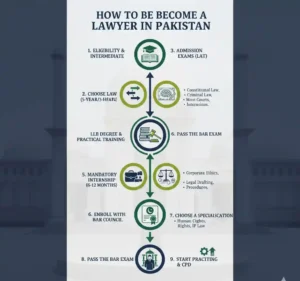
6. Can foreign nationals become lawyers in Pakistan?
Yes, foreign nationals can pursue law in Pakistan if they meet the admission criteria, complete an LLB from a recognized institution, and enroll with the Pakistan Bar Council. Passing the bar exam is also required for practice.
7. Which legal fields are most in demand in Pakistan?
High-demand fields include corporate law, criminal litigation, constitutional law, intellectual property law, cyber law, and international law. These areas offer strong career growth and opportunities for specialization.
8. When should a law student decide on their specialization?
Students typically decide on a specialization during the later years of their LLB program. Early exposure through internships, moot courts, and practical experiences helps in choosing a specialization aligned with personal interests and career goals.
9. Do internships affect career opportunities in law?
Absolutely. Internships provide practical experience, exposure to courtroom procedures, and networking opportunities. The type of internships you pursue often influences your specialization and career path as a lawyer.
How To Become a Lawyer:
Read More: How To Become a Lawyer