
Law Practice Tips for Beginners — A Complete Guide for New Lawyers
Starting a legal career is exciting, challenging, and often overwhelming. Many new lawyers enter the field with excellent academic records but little understanding of real-world legal practice. That’s where law practice tips for beginners become essential. These practical tips help new lawyers navigate client handling, case preparation, research, ethics, and courtroom procedures. Whether you’re beginning your career in litigation, corporate law, family law, or any specialization, the right approach during the early years defines your professional path.
This comprehensive guide provides in-depth, actionable law practice tips for beginners, helping you build confidence, enhance skills, and avoid common mistakes. From communication strategies to time management, this guide covers everything new lawyers need to grow in their profession.
 Understanding the Realities of Legal Practice
Many new lawyers step into the profession assuming it mirrors what they’ve studied in law school. However, real-world legal work is significantly more practical, people-centered, and deadline-driven. Understanding these realities is one of the first and most important law practice tips for beginners.
Law School vs. Legal Practice
Law school teaches theory, statutes, and case law. Legal practice requires:
-
Negotiating with clients
-
Drafting and reviewing legal documents
-
Presenting arguments in court
-
Managing deadlines
-
Maintaining communication
-
Understanding client psychology
The transition can feel overwhelming, but embracing this change is a crucial part of professional growth.
Building Strong Legal Research and Drafting Skills
Legal research and drafting form the backbone of legal practice—especially for beginners.
Research Skills Matter
One of the key law practice tips for beginners is to master research tools like:
-
Legal search databases
-
Case law repositories
-
Government portals
-
Law journals and publications
Strong research ensures you create solid legal arguments and avoid mistakes that could weaken your case.
Drafting with Precision
Drafting legal documents is more than writing—it’s about clarity and precision. Beginners must learn:
-
How to structure petitions
-
How to draft agreements
-
How to prepare affidavits
-
How to write legal notices
Good drafting reflects your professionalism and legal understanding.
Time Management and Organization
Time management is one of the most important law practice tips for beginners, as legal work is deadline-driven. Missed deadlines can lead to case losses or malpractice issues.
Practical Time Management Methods
-
Use digital calendars
-
Set reminders for hearings
-
Review case files one day before court
-
Break tasks into manageable steps
A well-organized lawyer is always more respected and trusted.
Communication Skills That Build Trust
Communication is a powerful skill every new lawyer must develop. Whether speaking to clients, judges, or colleagues, clarity and confidence are essential parts of effective communication.
Listen Before You Speak
An underrated yet vital part of law practice tips for beginners is active listening. It helps you:
-
Understand client needs
-
Clarify legal objectives
-
Prepare accurate case strategies
Professional Communication Style
Keep communication:
-
Clear
-
Concise
-
Formal
-
Respectful
This creates trust and builds your professional reputation.
Learning to Manage Clients Professionally
Clients are central to your legal career. Understanding how to handle them professionally is one of the essential law practice tips for beginners.
Set Clear Expectations
Applicants often misunderstand legal procedures. Explain:
-
Case timelines
-
Costs
-
Required documents
-
Possible outcomes
Clear communication avoids misunderstandings.
Maintain Professional Boundaries
Always remain respectful and empathetic but maintain appropriate boundaries. This ensures healthy, ethical client-lawyer relationships.
Ethical Conduct in Legal Practice
Ethics form the foundation of the legal profession. As a new lawyer, following ethics is one of the most crucial law practice tips for beginners.
Key Ethical Principles
-
Maintain confidentiality
-
Avoid conflicts of interest
-
Respect rules of professional conduct
-
Represent clients diligently
Being ethical builds long-term professional credibility.
Courtroom Confidence and Preparation
Stepping into the courtroom for the first time can be intimidating. But with proper preparation, you can appear confident and professional.
Prepare Before Every Hearing
-
Know your case thoroughly
-
Read relevant case laws
-
Practice your arguments
-
Reach court early
One of the most practical law practice tips for beginners is to observe senior lawyers in court—you’ll learn valuable techniques.
Courtroom Etiquette
-
Stand when addressing the judge
-
Speak clearly
-
Dress professionally
-
Avoid unnecessary movements
Professional courtroom behavior strengthens your credibility.
Building a Professional Network
Networking is a long-term investment in your career. It connects you to opportunities, mentorship, and guidance.
Types of Networking Useful for Beginners
-
Senior lawyers
-
Professors
-
Bar associations
-
Legal conferences
-
Law firm colleagues
Consistent networking is one of the most effective law practice tips for beginners to grow professionally.
Continuous Learning and Growth
Law is a constantly evolving field. Beginners must keep learning to stay relevant.
Ways to Continue Learning
-
Attend workshops
-
Study new case laws
-
Take online legal courses
-
Participate in bar society events
Staying updated ensures competence and professional excellence.
Using Technology to Your Advantage
Modern legal practice depends heavily on digital tools. Using technology effectively is a highly practical law practice tips for beginners.
Useful Tools for Young Lawyers
-
Case management software
-
Online research portals
-
Digital filing systems
-
Virtual meeting platforms
Technology helps you stay organized and efficient.
Avoiding Common Mistakes Made by New Lawyers
Being aware of mistakes helps you avoid them. Some common mistakes include:
-
Overconfidence
-
Poor time management
-
Weak documentation
-
Miscommunication with clients
-
Lack of preparation
Following structured law practice tips for beginners protects you from these pitfalls and sets the foundation for success.
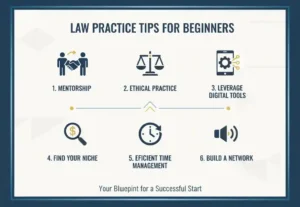
FAQs: Law Practice Tips for Beginners
1. What are the most important law practice tips for beginners?
The most important law practice tips for beginners include mastering legal research, improving drafting skills, managing time effectively, communicating clearly, and maintaining strong ethics. These skills lay the foundation for a successful legal career.
2. How can beginners improve their courtroom confidence?
One of the most effective law practice tips for beginners is to observe senior lawyers, prepare arguments thoroughly, and practice courtroom etiquette. Early preparation and confidence-building exercises help immensely.
3. Why is communication essential for new lawyers?
Communication is central to client handling, negotiation, and courtroom advocacy. Clear communication remains one of the core law practice tips for beginners because it shapes how you represent clients and interact professionally.
4. How important is technology in modern law practice?
Technology is essential today. A major law practice tips for beginners is to use legal software, research tools, and online resources to stay organized and efficient.
5. What mistakes should new lawyers avoid?
Common mistakes include poor time management, lack of preparation, miscommunication, and ignoring ethics. Following structured law practice tips for beginners helps avoid these issues and ensures smoother professional development.
6. How can beginners manage stress in the legal profession?
One of the most practical law practice tips for beginners is learning to manage stress through proper scheduling, breaks, and realistic workload planning. New lawyers should also prioritize work–life balance to stay mentally strong.
7. Do beginners need mentorship in their early legal career?
Yes. Mentorship is highly beneficial, and many law practice tips for beginners emphasize the value of learning from experienced lawyers. Mentors help beginners understand court procedures, case strategies, and client handling techniques.
8. How can young lawyers improve their legal writing skills?
Improving legal writing is a key part of effective law practice tips for beginners. Reading judgments, studying legal drafts, and practicing structured writing regularly help new lawyers enhance clarity, precision, and accuracy.
9. What role does client communication play for beginners?
Client communication is extremely important. Many law practice tips for beginners focus on setting expectations early, updating clients regularly, and explaining legal concepts in simple language to build trust and professionalism.
10. How can beginners build a strong professional reputation?
A strong reputation is built through ethical conduct, punctuality, preparedness, and honesty. Among all law practice tips for beginners, maintaining professionalism and delivering quality work consistently is what truly sets new lawyers apart.